Smart Torque Wrench Technology Reshaping Industrial Bolting Efficiency
Digital Torque Systems Become Essential in Modern Industry
Industrial manufacturing standards continue to become stricter across global markets.
Factories, energy companies, and engineering contractors now require fastening systems with higher precision and better operational control.
Traditional torque tools without digital monitoring functions are gradually being replaced by intelligent tightening systems.
Smart torque wrench technology is now widely used in industrial assembly, equipment maintenance, pipeline engineering, and heavy machinery production.
Accurate bolt tightening directly affects equipment safety and service life.
For industrial companies, improving fastening reliability means reducing maintenance costs and preventing unexpected shutdowns.
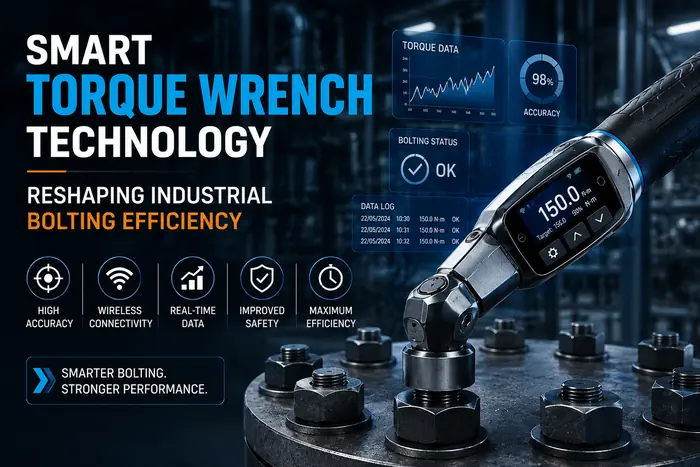
Smart Torque Wrenches Improve Industrial Quality Control
Modern smart torque wrench systems can automatically measure and store tightening data during operation.
This helps factories establish more reliable quality inspection procedures.
Torque values can be tracked for every bolt during assembly operations.
Production managers can quickly identify abnormal tightening conditions and reduce defective products.
Digital Recording Reduces Human Error
Manual recording methods often create inaccuracies during industrial operations.
Digital torque systems eliminate the need for handwritten records.
Torque data is automatically stored and transferred into management software.
This greatly improves inspection efficiency and data reliability.
Many industrial customers now require complete tightening reports before equipment delivery.
Digital documentation helps manufacturers satisfy international quality standards.
Real-Time Alerts Increase Operational Safety
Over-tightened or under-tightened bolts can create major industrial risks.
Smart torque tools immediately alert operators when torque values exceed preset limits.
This reduces fastening failures and improves worker safety.
Industries such as oil and gas, offshore engineering, and power generation especially benefit from intelligent monitoring functions.
Industrial Automation Accelerates Torque Tool Innovation
Global manufacturers are increasing investment in automated production systems.
Torque tool technology is evolving rapidly to match industrial automation requirements.
Programmable torque systems are becoming standard equipment in modern assembly lines.
Automated fastening solutions help factories improve consistency and production speed.
Programmable Tightening Improves Production Stability
Modern torque systems allow engineers to preset tightening sequences and torque parameters.
This ensures every bolt is tightened according to exact production specifications.
Consistent fastening quality reduces equipment failure rates and improves final product reliability.
Automotive factories and heavy machinery manufacturers increasingly depend on programmable torque systems for mass production operations.
Robotic Torque Systems Reduce Labor Dependency
Labor shortages and rising operating costs are influencing industrial production strategies.
Robotic torque systems help manufacturers reduce dependence on manual labor.
Automated bolting systems can work continuously with stable tightening accuracy.
This increases production efficiency while lowering long-term labor expenses.
Industrial robots integrated with torque sensors are becoming common in advanced manufacturing facilities.
Wireless Torque Technology Supports Smart Factories
Wireless communication functions are becoming increasingly important in industrial environments.
Bluetooth and WiFi-enabled torque tools allow real-time data sharing between operators and management systems.
Factory managers can monitor tightening conditions remotely and analyze production performance instantly.
Smart factory systems require seamless communication between production equipment and digital management platforms.
Cloud-Based Data Management Improves Efficiency
Some advanced torque systems now support cloud data storage.
This allows industrial companies to access tightening records from multiple locations.
Large engineering projects often require centralized data management for inspection and maintenance purposes.
Cloud-based torque monitoring improves project coordination and simplifies data analysis.
Remote Diagnostics Reduce Maintenance Downtime
Wireless technology also helps manufacturers provide faster technical support.
Remote diagnostic functions allow engineers to identify tool problems without onsite inspection.
This reduces repair delays and minimizes equipment downtime.
Industrial users benefit from faster maintenance response and more stable operations.
Energy Efficiency Influences Future Torque Tool Design
Industrial companies are placing greater emphasis on energy-saving equipment.
Torque tool manufacturers are developing systems with lower energy consumption and higher operational efficiency.
Battery-powered torque wrenches are becoming more powerful and more practical for industrial applications.
Modern lithium battery systems offer longer operating time and shorter charging cycles.
Portable cordless torque tools are especially useful for field maintenance and remote industrial locations.
Compact Torque Tools Improve Operator Comfort
Ergonomic tool design is becoming a major development focus.
Lighter torque tools reduce worker fatigue during long operating periods.
Compact structures also improve accessibility in narrow industrial environments.
Improved operator comfort can increase workplace productivity and reduce injury risks.
Customized Torque Solutions Become More Valuable
Different industries require different bolting specifications.
Many industrial companies now prefer customized torque solutions instead of standard products.
Professional torque tool manufacturers can provide application-specific equipment according to customer requirements.
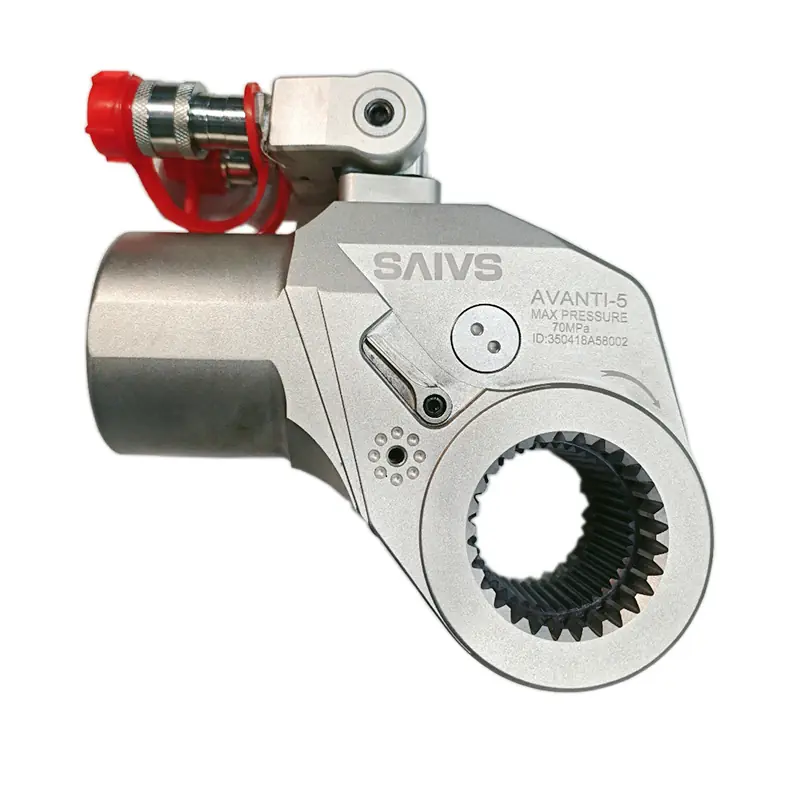
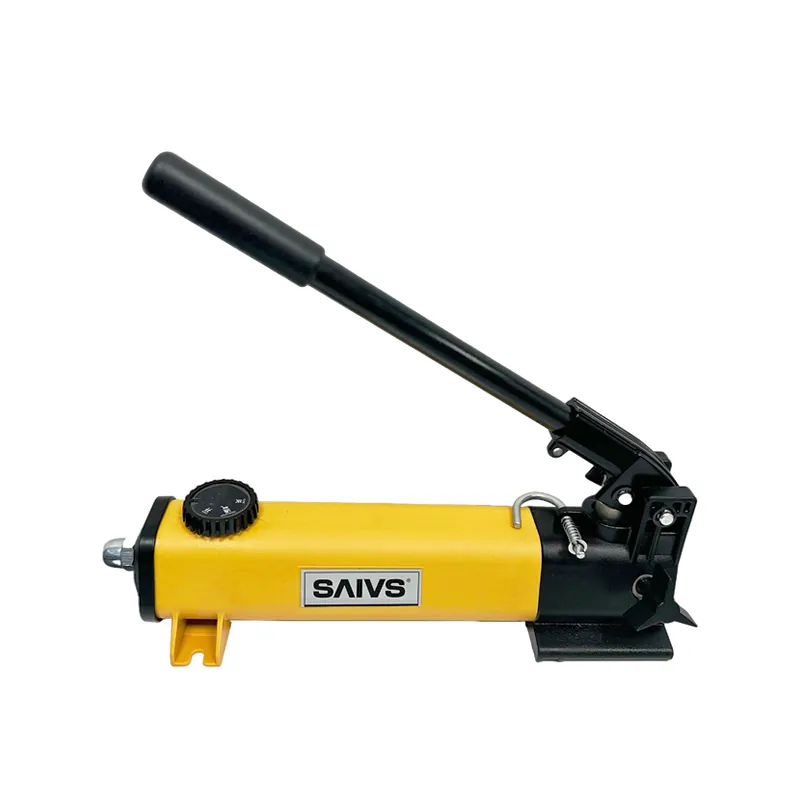
Customized Hydraulic Torque Wrenches, sockets, pumps, and control systems help industrial users improve operational efficiency.
Technical consultation and engineering support are also becoming important purchasing considerations.
Advanced Torque Tool Technology Creates Long-Term Industrial Benefits
Industrial bolting systems are moving toward greater intelligence, automation, and digital integration.
Companies using advanced torque tool technology can improve product quality, reduce maintenance costs, and increase operational safety.
Smart torque wrench systems will continue playing a critical role in modern industrial manufacturing and maintenance operations.
Reliable torque tool suppliers with strong production capabilities and technical expertise can help industrial customers build more efficient fastening systems.
Professional consultation and customized product support allow industrial buyers to select suitable torque solutions for demanding applications.